Soothing the Overwhelmed Nervous System: Daily Rituals & Recipes from Traditional Healing

The body remembers what the mind tries to forget. In the quiet hours before dawn, in the tension held between your shoulder blades, in the shallow breath you didn't notice you were taking, your nervous system speaks a language older than words.
Modern life moves at a frequency the human body was never designed to sustain. The sympathetic nervous system, that ancient guardian meant to propel us from danger, now fires continuously in response to email notifications, traffic, and the low hum of perpetual doing. We have forgotten how to complete the stress cycle. We have forgotten how to return home to ourselves.
Traditional healing systems understood what neuroscience is only now confirming: the body holds the map back to equilibrium. Through the wisdom of Traditional Chinese Medicine, the grounding practices of aromatherapy, and the restorative power of plant medicine, we can guide the nervous system from activation to integration, from dysregulation to deep rest.
Understanding Nervous System Dysregulation
The autonomic nervous system operates like the changing seasons, meant to flow between activity and rest, expansion and retreat. The sympathetic branch propels us forward, heightens our senses, prepares us for action. The parasympathetic branch invites us inward, activates digestion and repair, allows the body to remember safety.
In Traditional Chinese Medicine, this mirrors the dance of Yang and Yin. Yang energy rises, activates, illuminates. Yin energy descends, nourishes, restores. When Yang burns too bright for too long, the body's essential Yin becomes depleted. The Heart houses the Shen, our spirit and consciousness, and when overstimulated, the Shen becomes restless, unable to settle into the Heart's chamber at night. Sleep becomes elusive. Anxiety takes root.
The signs of an overwhelmed nervous system are written in the body's vernacular: racing thoughts that won't quiet, a startle response that fires too easily, digestive disturbances, difficulty falling or staying asleep, feeling simultaneously exhausted and unable to rest. The body is asking for something it has been denied, the sacred space to complete the stress cycle and return to baseline.
Modern science names this vagal tone, the functioning of the vagus nerve, that wandering pathway connecting brain to heart to gut. Ancient traditions called it by different names but understood the same truth: we must tend to the passages between mind and body, creating rituals that signal to our deepest biology that we are, in this moment, safe.
Morning Ritual: Awakening with Intention
The transition from sleep to waking sets the tone for the nervous system's entire day. Rather than reaching immediately for your phone, reaching immediately into the world's demands, create a threshold practice that honors the body's emergence from rest.
Begin in stillness. Before rising, place one hand on your heart and one on your belly. Simply notice the breath. No need to change it yet, just witness. This is the practice of interoception, of turning attention inward, of remembering that you have an inner landscape worth attending to.
Breathwork for parasympathetic activation. The exhale is the body's natural relaxation response. Practice this ancient rhythm: inhale through the nose for a count of four, hold gently for four, exhale through the nose for a count of six to eight. The extended exhale activates the vagus nerve, signaling to your nervous system that there is no threat, no urgency, no need for the armor of hypervigilance. Continue for five to ten cycles, feeling the body soften with each breath released.
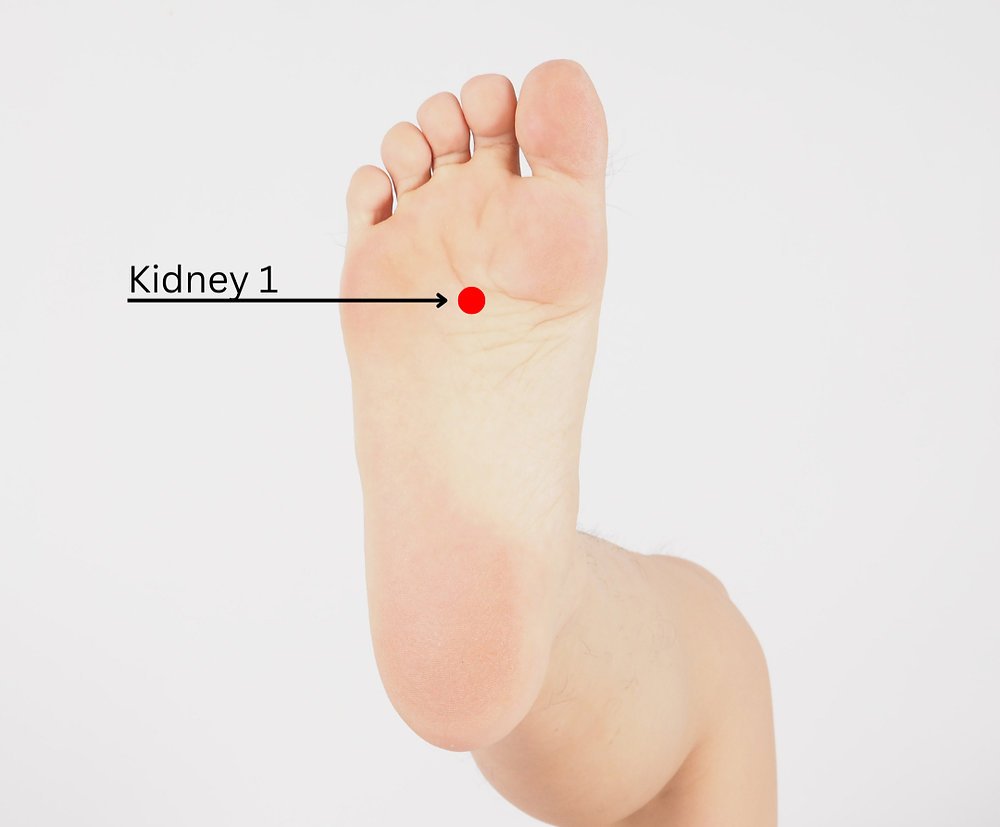
Acupressure for grounding. In Traditional Chinese Medicine, the Kidney meridian governs our deepest reserves and our capacity to feel rooted. Kidney 1, known as Yongquan or "Gushing Spring," sits in the center of the sole of each foot. Upon rising, sit at the edge of your bed and press firmly into this point on each foot for one to two minutes. Imagine roots extending down through the floor, connecting you to the earth beneath. This practice draws excess Yang energy downward, calming an overactive mind and inviting a sense of embodied presence.
Aromatherapy blend for nervous system support. Essential oils work directly on the limbic system, that ancient part of the brain governing emotion and memory. Create a morning ritual blend in a small roller bottle with a carrier oil:
3 drops Vetiver (deeply grounding, calming to racing thoughts)
2 drops Frankincense (centering, supports slow deep breathing)
2 drops Bergamot (uplifting without overstimulation, regulates cortisol)
10ml carrier oil (jojoba or fractionated coconut)
Apply to pulse points, behind the ears, and over the heart center. Breathe deeply, allowing the aromatic molecules to signal safety to your nervous system before you step into your day.
Midday Reset: Breaking the Stress Cycle
The body accumulates stress like sediment. By midday, tension has often settled into the jaw, the shoulders, the space between the shoulder blades where the Heart meridian flows. Without intervention, this activation compounds, carrying into evening and disrupting the body's ability to transition into rest.
The physiological sigh. Stanford neuroscientist Andrew Huberman has studied what yogis have known for millennia: a specific breathing pattern can rapidly reduce stress in real time. Inhale deeply through the nose, then at the top of the breath, take a second sip of air to maximally inflate the lungs. Then release in a long, slow exhale through the mouth. This double-inhale, extended-exhale pattern quickly offloads carbon dioxide and engages the parasympathetic brake. Practice two to three cycles whenever you notice shoulders creeping toward ears or jaw beginning to clench.
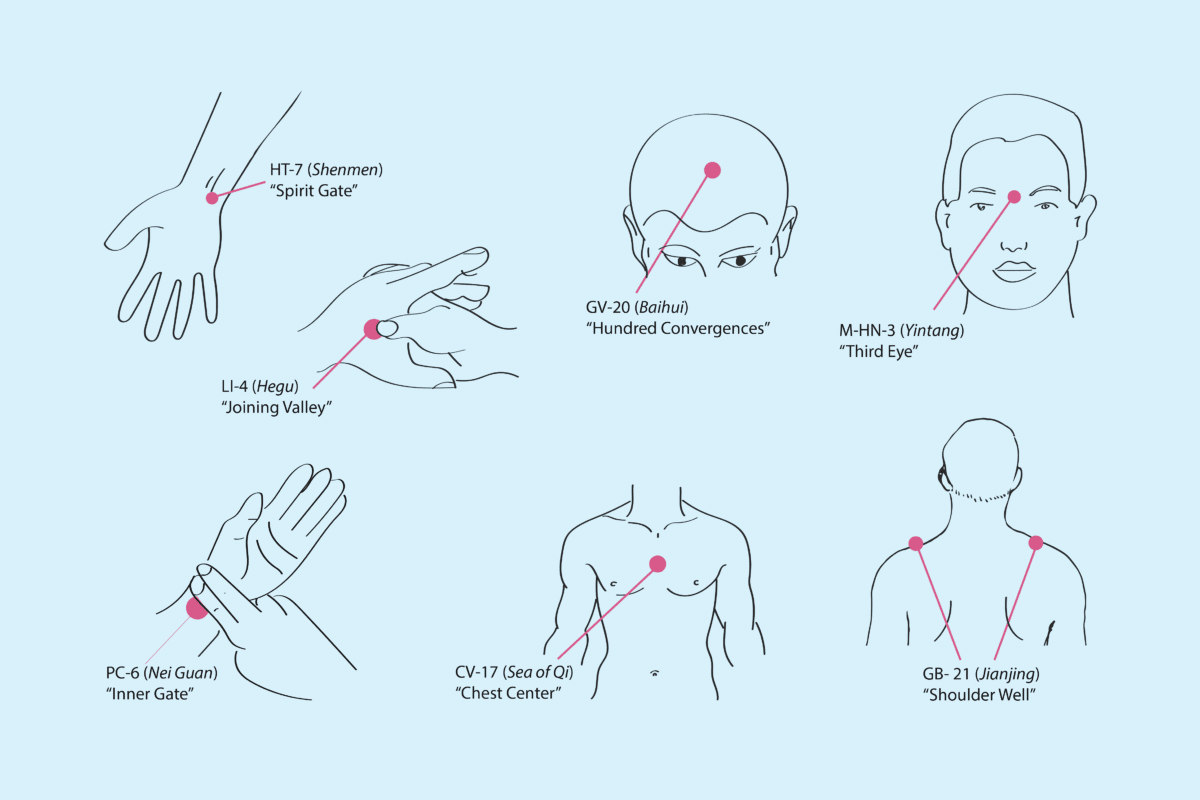
Heart 7 acupressure point. On the wrist crease, in line with your pinky finger, lies Shenmen: "Spirit Gate." This point in Traditional Chinese Medicine calms the Shen, settles anxiety, and helps release accumulated emotional tension. Using your thumb, apply firm pressure in small circles for one to two minutes on each wrist. Particularly powerful before difficult conversations or when you feel activation rising.
Earthing practice. If possible, step outside. Remove your shoes. Place bare feet on earth, grass, or stone. The practice of grounding, direct physical contact with the earth's surface, has been shown to reduce cortisol, improve heart rate variability, and shift the nervous system toward parasympathetic dominance. Even five minutes recalibrates. If going outside isn't possible, place your palms on a cool window pane or touch the leaves of a plant, any practice that reminds the body it is part of a larger living system.
Evening Wind-Down: Preparing for Restoration
Sleep is not merely the absence of waking. It is an active process of repair, integration, and memory consolidation. Yet for those with dysregulated nervous systems, the transition to sleep becomes fraught. The body doesn't trust that it's safe to let go. The mind continues its vigilant patrol.
Creating an evening ritual trains the nervous system to recognize the pathway toward rest. Consistency matters more than perfection, the body learns through repetition that these signals mean safety, that release is not only permitted but welcomed.
Yin-nourishing herbal infusion. In Traditional Chinese Medicine, nighttime belongs to Yin: the cooling, moistening, descending energy that allows for restoration. When Yin is depleted by chronic stress, the mind remains restless and sleep becomes fragmented. This gentle tea blend supports the body's return to Yin:
1 tsp Chamomile (nervine, gently sedating, opens the Heart meridian)
1 tsp Passionflower (reduces mental chatter, supports GABA production)
½ tsp Skullcap (tonifies the nervous system, calms without dulling)
½ tsp Tulsi/Holy Basil (adaptogenic, helps the body integrate stress)
Small piece of fresh ginger (warming, aids digestion, prevents stagnation)
Steep for seven to ten minutes covered. Sip slowly, making the act of drinking a meditation in itself. Feel the warmth descend through your chest, your belly. Let each sip be a message to your nervous system: the day is complete. You are allowed to rest.
Self-massage for myofascial release. Fascia holds memory. Tension lodges itself in the connective tissue, creating patterns of armour the body maintains long after the original stressor has passed. A simple self-massage practice before sleep helps release these holding patterns.
Warm a small amount of oil in your palms (sesame oil is traditional in Ayurveda for its grounding, nervine properties). Beginning at your feet, use long strokes toward the heart—up the calves, the thighs, the arms. Over joints, use circular motions. Over the belly, move in clockwise circles to support digestion. Pay particular attention to the neck and jaw, where stress concentrates. Work slowly, with reverence for the body that has carried you through your day.
Aromatherapy for sleep transition. The olfactory system connects directly to the amygdala and hippocampus. Scent can bypass cognitive resistance and speak directly to the nervous system's deepest layers. Create an evening ritual blend:
3 drops Lavender (the most studied essential oil for sleep quality and anxiety reduction)
2 drops Roman Chamomile (deeply calming, particularly for those who wake between 1-3am when the Liver meridian is most active)
1 drop Sandalwood (grounding, quiets mental loops)
Diffuse in your bedroom thirty minutes before sleep, or apply diluted to the soles of your feet. The ritual of application itself becomes a somatic anchor, a signal that the day has released its claim on you.
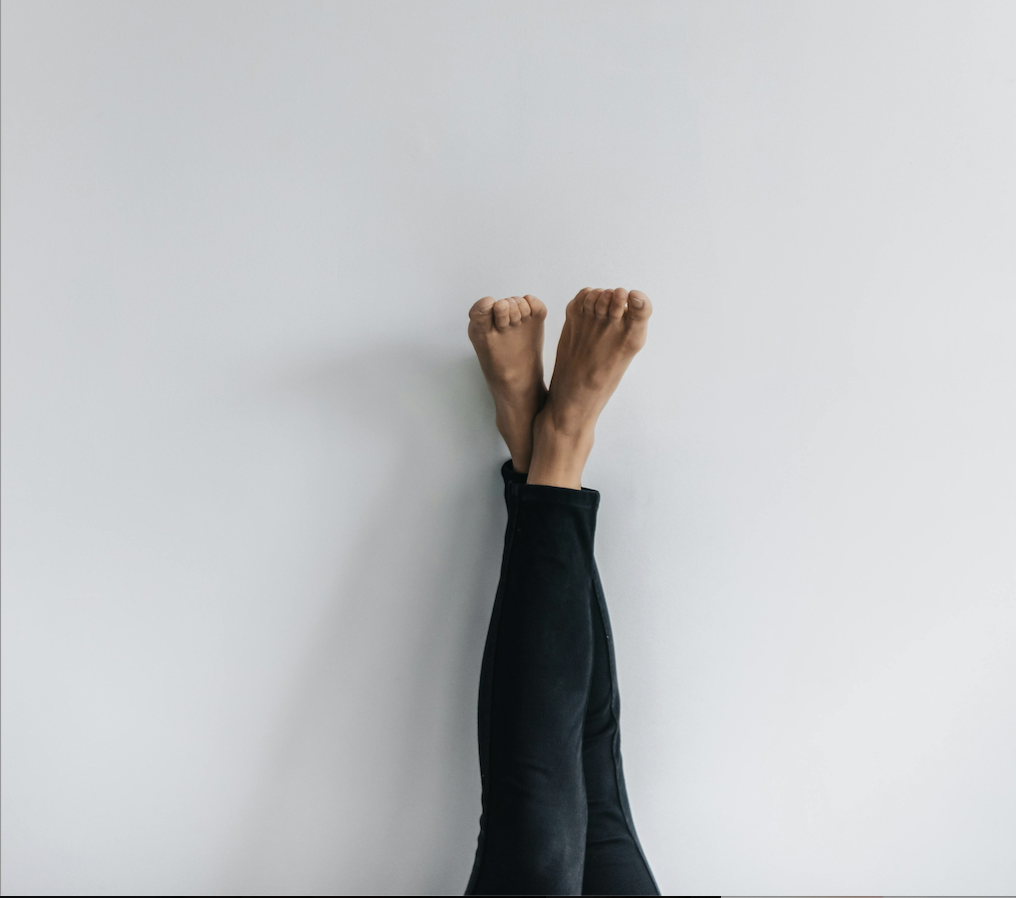
Restorative position: Legs up the wall. Fifteen minutes in Viparita Karani, legs extended up a wall, hips close to the baseboard, arms relaxed at your sides, is profoundly regulating for the nervous system. This gentle inversion encourages venous return, activates the parasympathetic branch, and creates a sense of being held by something larger than yourself. If the full position is uncomfortable, place a bolster or folded blanket under your hips. Stay for ten to twenty minutes, focusing on the lengthening of each exhale.
Integration: The Practice of Return
Nervous system regulation is not a destination but a practice of return. The sympathetic activation will come again, this is not failure but human design. What changes is the speed with which you recognise activation and the tools you possess to guide yourself back to center.
In Traditional Chinese Medicine, health is not the absence of imbalance but the capacity to return to balance swiftly. A healthy nervous system is not one that never experiences stress but one that can complete the stress cycle, moving fluidly between activation and rest, between doing and being.
These practices work synergistically. The morning ritual prevents the accumulation of tension. The midday reset interrupts the stress cycle before it entrenches. The evening wind-down creates a bridge from sympathetic to parasympathetic, from the world's demands to your body's need for restoration.
Begin with one practice. Let it become familiar, embodied, automatic. Then add another. Over weeks and months, you are not simply managing symptoms but retraining the nervous system itself, building new neural pathways that recognize safety, that remember rest, that trust in the possibility of ease.
The body is wiser than we know. Given the right conditions, the right rituals, the right remedies, the right reverence for its innate rhythms, it remembers how to regulate itself. It remembers how to come home.
This is the work: not to override the body's signals but to listen more deeply, to provide what has been missing, to create the conditions in which your nervous system can finally, fully, rest.
To explore personalised nervous system support through acupressure, herbal medicine, and bodywork, book your session here.
